
Explaining AEDs to children: a simple guide for schools
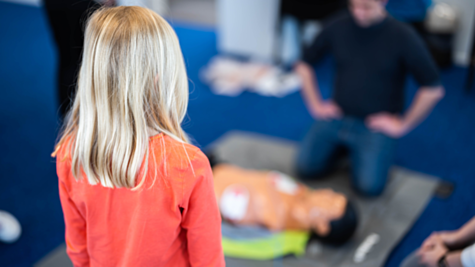
An AED saves lives, but how do you explain that to children? In this blog, we explain how to teach children at school in a simple way what an AED is, what it does and why it is important for them to understand it too. Children are curious and enjoy learning about health and safety. The subject of an AED (Automated External Defibrillator) may sound complicated, but it can be explained very clearly at school.
What is an AED?
An AED is a device that helps save someone who is experiencing cardiac arrest. You can explain it to children at school like this:
“An AED is a kind of super helper that checks how someone’s heart is doing and gives an electric shock if needed, so the heart can start beating properly again.”
The AED tells you exactly what to do using clear voice instructions and pictures. This means that anyone, including someone without medical knowledge, can help in an emergency situation.
Why is it important for children to know this?
Reducing fear: If children know what an AED does, hopefully they will be less afraid to provide help in an emergency when they are older.
Awareness: They learn that acting quickly can save lives.
Safety at school: Many schools already have an AED. Explaining what it is ensures that everyone knows where it is located, what it is used for and why it is important.
How do you explain it in the classroom?
Use relatable examples when explaining an AED:
“Imagine someone suddenly collapses and is no longer breathing. You call 999 and follow the instructions given by the emergency services over the phone.”
“An AED talks to you. It tells you exactly what to do.”
Fun lesson ideas
• Show a training AED or watch a video demonstrating how it works. Make sure the video is suitable for children and not too intense.
• Do a role-play: one student calls 999, one gets the AED, and one follows the AED’s instructions.
• Quiz question: What does AED stand for? (Answer: Automated External Defibrillator.)
Tips for schools
Make sure students know where the AED is located and that new teachers are also informed about its location during their introduction. Place a clear AED symbol next to it and combine this with a short explanation in easy-to-understand language.
An AED is not a scary device, but a lifesaver! By discussing the subject in a positive and understandable way, you can help children develop the confidence and knowledge they need to provide first aid later in life.
Would you like to organise a lesson or demonstration about AEDs and CPR? Take a look at training AEDs or training sets.
Please note: Always take the children’s age, level of understanding and sensitivity into account. Discuss the subject in a positive and reassuring way. With younger children, the focus should not be on medical details.