Saving Lives vs. Saving Modesty: Understanding the RCUK 2025/2026 Female AED Guidelines
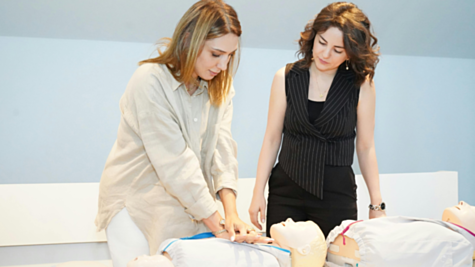
In the world of emergency first aid, every second counts. Yet, statistics consistently show a "gender gap" in survival rates for out-of-hospital cardiac arrests. To address this, the Resuscitation Council UK (RCUK) released its updated 2025 Guidelines, which have become the definitive standard for all UK first aid training and implementation as of early 2026.
A major focus of these new standards is removing the "modesty paralysis" that often delays life-saving life-saving CPR on women.
The "2025 vs. 2026" Clarification
While the official document is titled the RCUK 2025 Guidelines, the transition for training providers and workplaces was completed in early 2026. If you are updating your workplace safety protocols or attending a refresher course this year, these are the current, mandatory standards you need to follow for female CPR.
Key Changes: Bras, Bare Skin, and Placement
The new guidance provides a clear hierarchy of actions when performing CPR for women and using an AED:
1. Priority: Direct Skin Contact
For an Automated External Defibrillator (AED) to deliver a life-saving shock, the pads must be on bare skin. The 2026 training standards emphasize that rescuers should not be concerned about exposing a person’s chest. Life-saving always takes priority over modesty.
2. The "Adjust or Remove" Rule for Bras
The 2025/26 update clarifies exactly what to do with bras:
- Adjust: If you can place the pads correctly without the bra interfering, you can simply move straps or fabric aside.
- Remove/Cut: If a bra (especially an underwired one) obstructs the pad sites, it must be removed or cut off. Underwires are particularly dangerous as they can conduct electricity away from the heart or cause thermal burns to the skin during a shock.
Expert Tip: Every AED should be accompanied by an AED Prep Kit containing clothing shears to quickly and safely remove underwired bras.
3. The "Scoop and Lift" Technique
Correct pad placement is vital. The lateral (side) pad should be placed on the ribs, under the left armpit. In the 2026 curriculum, rescuers are taught to "scoop and lift" breast tissue to ensure the pad is flush against the ribs, rather than sitting on top of the breast, which increases electrical resistance.
4. Preserving Dignity Post-Placement
The guidelines acknowledge that once the AED pads are securely attached, you can lay a jacket or the removed clothing back over the casualty's chest. This preserves dignity without interfering with the machine’s analysis.
Modernizing Your Training Equipment
The best way to ensure your team is prepared for a real-world emergency is to train with realistic equipment. "Gender-neutral" manikins often fail to prepare students for the physical reality of navigating clothing and anatomy.
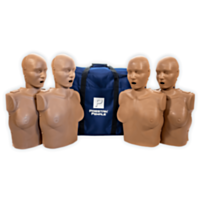
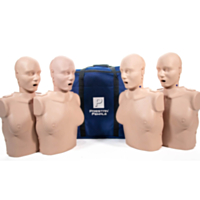
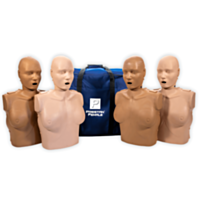
To meet the 2026 standards and ensure inclusive training, we recommend using a dedicated CPR dummy woman or accessory. We provide several Prestan female options to reflect the diversity of your community:
- Prestan Professional Female CPR Training Torso: These purpose-built female CPR manikins allow students to practice correct "lift and place" techniques. They are available in both Light Skin and Dark Skin versions to reflect the diversity of your community or workforce.
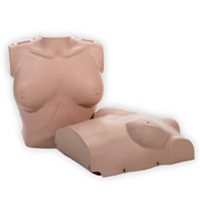
- Prestan Female Accessory (4-Pack): An essential, cost-effective upgrade for your existing manikin fleet. These accessories allow you to turn any standard Prestan manikin into a female model. We stock these in both Light Skin and Dark Skin options.
By embracing the RCUK 2025/26 guidelines, we can close the gender gap in cardiac arrest survival. Ensuring your team is trained with female-specific manikins isn't just a "nice to have"—it's a critical step in saving lives.