
How do you use an AED on someone with a pacemaker?
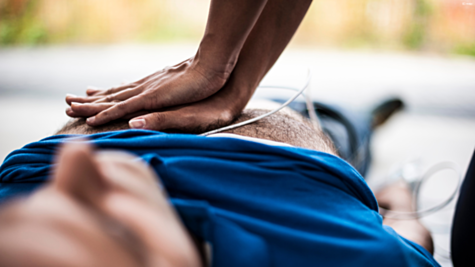
“Can an AED be used on someone with a pacemaker? ” This is a question that is asked regularly. In this blog, we explain why you can use an AED on a victim with a pacemaker and what you need to pay attention to when applying the electrodes in this situation.
Let’s start with a brief explanation of what exactly a pacemaker is. A pacemaker is a small electronic device implanted under the skin in the chest area that helps the heart maintain the correct rhythm. If the patient’s heart rhythm deviates from normal, the pacemaker delivers small electrical impulses to help the heart return to the correct rhythm. In a way, it is a small version of what an AED can also do.
Using an AED with a pacemaker
A pacemaker delivers small electrical impulses, but these are not sufficient in the event of cardiac arrest. This is where an AED may be needed.
But can an AED be used safely on someone who has a pacemaker? Modern AEDs are equipped with so-called pacemaker detection and artefact detection. This means that these AEDs can filter out the electrical impulses from the pacemaker and exclude them from the heart rhythm analysis, preventing a distorted analysis.
Artefact detection can also identify movements, muscle contractions and the victim’s breathing and filter these signals out of the analysis.
This means that you can use an AED normally on a patient with a pacemaker.
Important consideration when using an AED with a pacemaker
When an AED needs to be used on a victim with a pacemaker, there is one important consideration when applying the electrodes.
When a victim has a pacemaker, it is almost always clearly visible under the collarbone when the chest is exposed. You can see a flat disc underneath the skin.
When placing the electrodes, it is important to make sure that the electrode is not placed directly over the pacemaker. This can affect the contact between the skin and the electrode, which may have an adverse effect on the functioning of the pacemaker.
If you use an AED on someone with a pacemaker, we recommend informing the emergency medical professionals when they arrive. This helps them better understand the situation and take the appropriate next steps.
In summary
Do not hesitate to use an AED on someone with a pacemaker. Thanks to modern AED technology, the heart rhythm can be analysed correctly in someone with a pacemaker without interfering with the functioning of the device.
Every second counts during cardiac arrest. Therefore, even when a patient has a pacemaker, it is important to start CPR and use an AED as quickly as possible. This can significantly increase the victim’s chances of survival and contribute to a better quality of life after the emergency.
To feel confident using an AED, including in combination with a pacemaker, we recommend taking a CPR training course.